

The Challenge
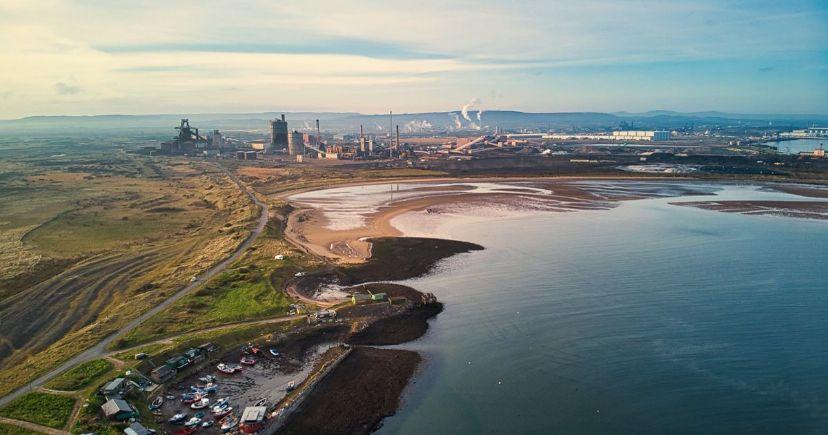
The UK government has identified CCS as a low-carbon solution which will significantly reduce CO2 emissions and help reach net-zero by 2050. Under Phase 2 of the UK Government's £170 million Industrial Decarbonisation Challenge, NEP received approval and funding for the project in Teesside, with potential expansion to Humberside, collectively known as the East Coast Cluster (ECC). The ECC will see the development of onshore and offshore infrastructure to transport millions of CO2 emissions from the industrial heartlands to the North Sea for safe and permanent storage.
However, like any new or emerging technology, CCS has faced its fair share of challenges – especially from a risk and bankability perspective – and building projects at scale requires significant capital and risk appetite. The shareholders had to raise £3.9 billion in funding and agree on a bankable structure under the newly adopted UK Transportation and Storage Regulatory Investment model to get the project off the ground. The shareholders therefore needed trusted financing partners with the required capital and experience to finance NEP.
Execution
Due to MUFG's robust balance sheet, extensive project finance experience, risk appetite, and knowledge of the CCS sector, the Structured Finance team was engaged to help finance NEP. As part of a consortium of international banks, MUFG acted as one of the lead financiers on the transaction and provided funding to a first-of-its-kind non-recourse financing structure.
The shareholders' previous experience of developing several important CCS projects helped to further de-risk the financing of the NEP project from both a completion and operational perspective. Revenue risks were also mitigated by the group arranging for a major emitter to start capturing and delivering carbon from day one, and via government support that guaranteed a certain level of revenue until more emitters connected to the project. Finally, government backing of the project helped to create an insurance market that was able to provide adequate coverage for CCS-specific risks, such as leakage risk.
MUFG's prior experience of financing first-of-a-kind clean technology transactions, combined with its understanding of the Regulated Asset Base model, proved critical in helping to get NEP over the line and securing its long-term future.
Results
The UK government, along with others worldwide, see CCS as crucial to reducing carbon emissions from the industrial sector and achieving ambitious net-zero targets. The second Track-1 CCS cluster, HyNet T&S, also reached financial close in April 2025, and the government's June 2025 Spending Review confirmed support for the Acorn project in Scotland and the Viking project in Humberside.
The unique landmark financing structure agreed on NEP demonstrates that CCS projects are bankable and will serve as a blueprint for future CCS clusters in the UK and projects globally.
For important information regarding sustainability and ESG considerations, please review our ESG Disclaimers here.